Choti Harad: Ayurveda’s Golden Remedy for Everyday Wellness
Introduction
In every Indian household, tucked away in the spice box or medicine cabinet, lies a treasure trove of herbs that have stood the test of time. One such gem is Choti Harad, often referred to as the “King of Medicines” in Ayurveda. My mother always keeps a small pouch of dried harad fruits in her kitchen, and whenever anyone complained of indigestion or fatigue, she would hand over a piece with warm water. At that time, I didn’t realize the depth of wisdom behind this simple act. Today, as Ayurveda regains global recognition, Choti Harad is being rediscovered as a holistic remedy for digestion, detoxification, and longevity.
What is Choti Harad?
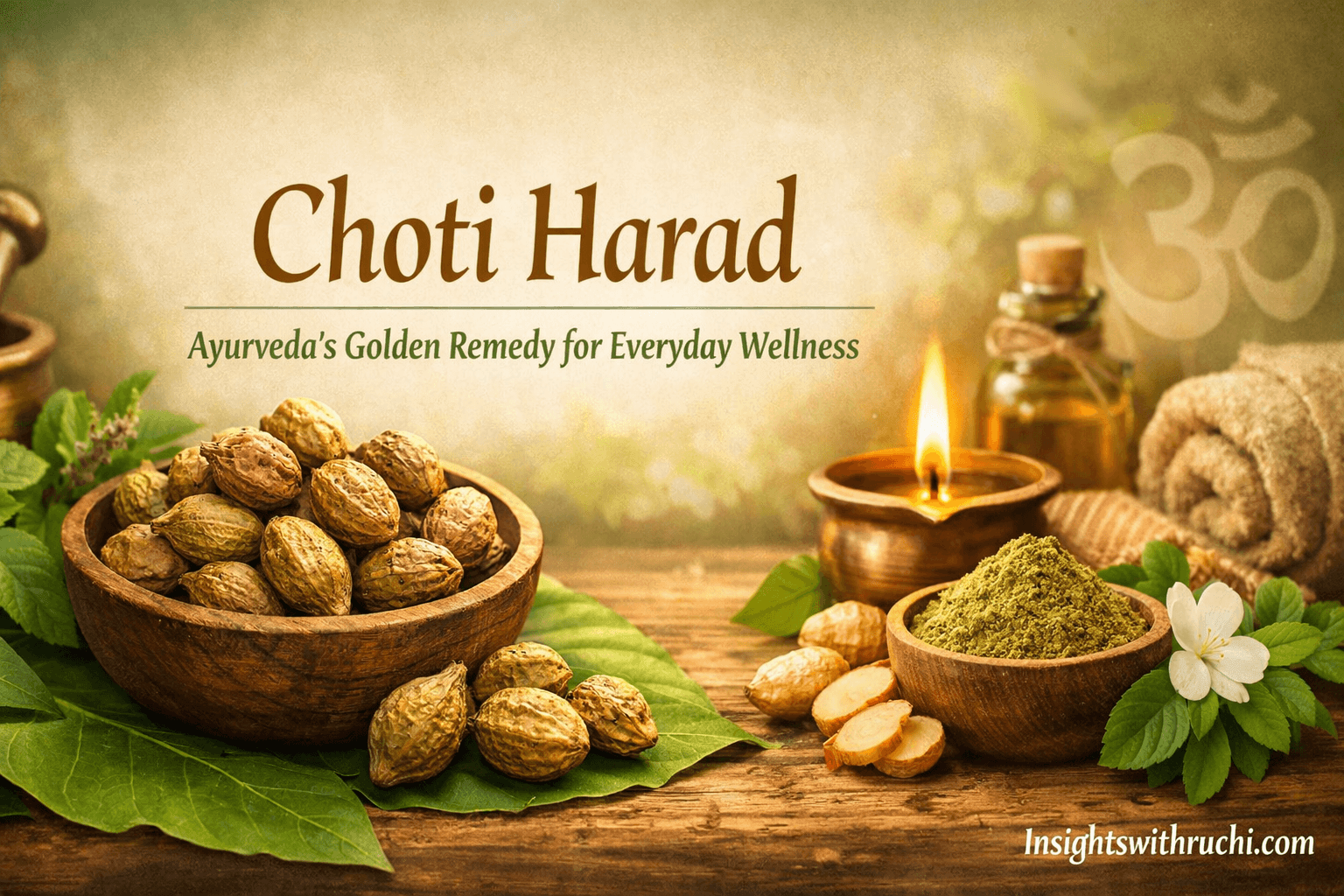
Choti Harad, scientifically known as "Terminalia Chebula", is a small, wrinkled fruit native to India and Southeast Asia. It belongs to the family Combretaceae and is one of the three fruits that make up the famous Ayurvedic formulation Triphala.
Appearance: Small, oval, greenish to brown fruit with ridges.
Taste: Bitter, astringent, slightly sweet aftertaste.
Ayurvedic Classification: Considered Tridoshic, meaning it balances Vata, Pitta, and Kapha doshas.
In Sanskrit, Harad is called "Haritaki", meaning “that which cleans and improves.” Ancient texts such as the Charaka Samhita and the Sushruta Samhita praise it as a rejuvenator and longevity enhancer.
Ayurveda’s Perspective on Choti Harad
Ayurveda teaches that an aggravated Vata dosha often manifests as dryness, irregular digestion, and constipation. Choti Harad, with its mild laxative properties, helps lubricate the intestines and restore smooth bowel movements. It reduces the roughness and dryness associated with Vata imbalance, bringing comfort to those who struggle with irregular digestion. By grounding the restless energy of Vata, Harad not only supports physical health but also promotes mental stability, reminding us that balance in digestion is deeply connected to balance in thought and action. Ayurveda considers Choti Harad a "Rasayana" (rejuvenator) because it balances all three doshas.
Ayurveda often prescribes Choti Harad in Panchakarma therapies, where it plays a crucial role in detoxifying the body before deeper cleansing treatments. Its ability to balance all three doshas makes it versatile and safe for most constitutions. Beyond Ayurveda, Harad holds sacred value in Buddhist and Tibetan medicine, where it is revered as a symbol of wisdom and healing. Ancient texts describe it as the “supreme medicine,” capable of addressing both physical and spiritual ailments. This reverence highlights that Harad is not merely a herb but a bridge between health and spirituality, reminding us that true healing encompasses body, mind, and soul.
Health Benefits of Choti Harad
1. Digestive Health: Choti Harad has long been cherished in Ayurveda as a gentle yet effective digestive aid. Acting as a mild laxative, it helps relieve constipation without the harsh side effects of synthetic medicines. My mother often roasted Harad powder lightly and mixed it with jaggery, offering it after festive feasts when heavy foods left us feeling sluggish.
Beyond easing bowel movements, Harad strengthens the digestive fire (Agni), which Ayurveda considers the cornerstone of good health. A strong Agni means better nutrient absorption, improved appetite, and reduced chances of bloating or acidity. Its bitter taste may not be pleasant, but the relief it brings makes it invaluable. By balancing the gut, Harad indirectly supports energy levels and mental clarity, reminding us that true wellness begins in the stomach.
2. Detoxification: Ayurveda emphasizes regular detoxification to maintain balance, and Choti Harad plays a vital role here. It cleanses the colon, flushing out accumulated toxins that can otherwise lead to sluggishness and disease. In traditional Panchakarma therapies, Harad is often prescribed to prepare the body for deeper cleansing. It also supports liver function, which is central to purifying blood and maintaining metabolic health. I recall family elders recommending Harad decoction during monsoon, a season when digestion weakens, and toxins accumulate. Modern studies highlight its role in reducing fat deposits, making it a natural aid for weight management.
Unlike fad diets, Harad works gently, aligning with the body’s rhythms. Detoxification with Harad is not just physical; it is symbolic of clearing mental clutter too, a reminder that simplicity and balance are keys to longevity.
3. Immunity & Longevity: Rich in antioxidants, Choti Harad protects the body from free radicals that accelerate aging and weaken immunity. Ayurveda reveres it as a "Rasayana"-a rejuvenator that enhances vitality and prolongs life. My mother often added Harad powder to Triphala, which we consumed during exam seasons to stay sharp and energetic. Its immune‑boosting properties make it a natural shield against seasonal infections, while its rejuvenating effects are believed to slow down the aging process. In Buddhist traditions, Harad is called the “supreme medicine,” symbolizing wisdom and healing. By enhancing energy levels and resilience, it allows us to embrace life’s demands with vigor.
4. Oral & Skin Health: Choti Harad’s benefits extend beyond internal health to external care. In Ayurveda, Harad decoction is used as a mouth rinse to treat gum infections and bad breath. I remember elders chewing Harad fruit after meals, not only for digestion but also to keep teeth strong. Its antibacterial properties make it effective in preventing cavities and maintaining oral hygiene. My mother applies roasted harad powder to mouth blisters, and astonishingly, they vanish within a day.
For skin, Harad works as a detoxifier, reducing acne and improving complexion. Women in rural India often applied Harad paste on wounds, trusting its healing powers long before modern antiseptics were available. Its ability to promote wound healing and reduce inflammation makes it a versatile remedy. In today’s skincare industry, where chemical products dominate, Harad stands out as a humble, natural solution that connects us back to the wisdom of our ancestors.
5. Respiratory & Nervous System: Choti Harad also supports respiratory health, making it beneficial for asthma, cough, and mucus congestion. In winters, my mother would prepare a Harad decoction with honey, soothing sore throats and easing breathing. Its expectorant properties help clear phlegm, offering relief in seasonal colds. Beyond the lungs, Harad calms the nervous system, reducing stress and anxiety. Ayurveda teaches that a balanced mind is as important as a healthy body, and Harad contributes to this equilibrium. By pacifying the Vata dosha, it helps reduce restlessness and promotes better sleep.
In modern times, where stress is a silent epidemic, Harad’s calming influence feels more relevant than ever. It reminds us that true wellness is holistic-nurturing the body, mind, and spirit together.
Ways to Consume Choti Harad
1. Powder (Churna):
Ingredients:
· ½ teaspoon Choti Harad powder
· Warm water
· Optional: Honey for taste
Procedure: The most traditional and widely practiced way of consuming Choti Harad is in powdered form, known as Churna. Take half a teaspoon of the powder and mix it with a glass of warm water before bedtime. This simple ritual works wonders for constipation and sluggish digestion. If the bitter taste feels overwhelming, adding a spoon of honey makes it more palatable while enhancing its healing properties.
2. Decoction (Kadha):
Ingredients:
· 2–3 dried Choti Harad fruits
· 2 cups water
· Optional: A pinch of black salt or ginger
Procedure: Another effective method is preparing a decoction, popularly called Kadha. Boil the dried Harad fruits in water until the liquid reduces to half. Strain it and drink warm. This preparation is especially useful during seasonal changes when the body needs detoxification and immunity support. Adding black salt or ginger enhances the taste and strengthens its digestive benefits.
3. Triphala Mix:
Ingredients:
· Equal parts Choti Harad, Amla, and Baheda powders
· Warm water or milk
Procedure: Choti Harad is one of the three fruits in the famous Ayurvedic formulation Triphala. To prepare, mix equal parts of Harad, Amla, and Baheda powders. Consume one teaspoon of this blend with warm water or milk, preferably at night. Triphala is celebrated for balancing all three doshas, improving digestion, detoxifying the body, and enhancing immunity. In many Indian homes, Triphala is considered a daily tonic, passed down as a family tradition for maintaining long‑term health and vitality.
4. Chewing Raw Fruit:
Ingredients:
1 dried Choti Harad fruit
Procedure: The most ancient and straightforward method is simply chewing the raw dried fruit. Though bitter in taste, this practice was common among elders who carried Harad fruits in their pockets and chewed them after meals. The act not only aided digestion but also kept oral health in check. While modern palates may find the bitterness challenging, this method connects us directly to the roots of Ayurveda, reminding us of how simple habits can nurture wellness.
5. Capsules/Tablets:
Ingredients:
· Choti Harad extract in capsule/tablet form (available in Ayurvedic stores)
Procedure: For those who prefer convenience, especially in today’s fast‑paced lifestyle, Choti Harad is available in capsules and tablets. These supplements contain standardized extracts, making dosage easier and taste more manageable. Simply follow the recommended dosage on the packaging or consult an Ayurvedic practitioner. This modern adaptation ensures that even those unfamiliar with traditional methods can benefit from Harad’s healing properties without compromising on ease of use.
Each method reflects how Ayurveda adapts to different lifestyles, from the rustic chewing of raw fruit to the modern capsule form. The choice depends on personal preference, but the essence remains the same: integrating Choti Harad into daily life for holistic wellness.
Who Should Avoid Choti Harad?
While Choti Harad is celebrated as a powerful Ayurvedic remedy, it is not suitable for everyone. Ayurveda emphasizes that every herb must be consumed mindfully, considering age, health condition, and individual constitution. Here are the groups advised to avoid or use caution with Harad:
Pregnant and lactating women: Harad’s strong detoxifying and laxative properties may interfere with pregnancy or affect breast milk quality, so it is best avoided during these delicate phases.
Children under 5 years: Young children have sensitive digestive systems, and Harad’s potency may be too strong for them, potentially causing discomfort or imbalance.
People with severe diarrhea or dehydration: Since Harad can further stimulate bowel movements, it may worsen diarrhea and lead to increased fluid loss, aggravating dehydration.
Those with low blood pressure: Harad has a mild hypotensive effect, which may lower blood pressure further. Anyone with this condition should consult a physician before use.
This cautionary note ensures that while we embrace the wisdom of Ayurveda, we also respect its principle of individualized care-"what heals one person may not suit another".
Best Time to Consume Choti Harad
For Constipation: Ayurveda recommends consuming Choti Harad powder at night with warm water for those struggling with constipation. The gentle laxative effect works overnight, ensuring smooth bowel movements by morning.
For Digestion: For improving digestion and appetite, Choti Harad is best taken early in the morning on an empty stomach. Ayurveda believes that this timing awakens the digestive fire (Agni), preparing the body to absorb nutrients more efficiently throughout the day.
For Immunity: To build long‑term immunity and resilience, Choti Harad is often consumed daily as part of Triphala, a blend of Harad, Amla, and Baheda. This combination balances all three doshas, detoxifies the system, and strengthens the immune response.
In essence, the timing of consumption is as important as the herb itself. Whether taken at night for constipation, in the morning for digestion, daily for immunity, or seasonally during monsoon, Choti Harad adapts to the body’s needs, making it a versatile and timeless Ayurvedic remedy.
FAQ Section
Q1. What is Choti Harad called in English?
It is known as Terminalia chebula or “Chebulic Myrobalan.”
Q2. Can Choti Harad help with weight loss?
Yes, by improving digestion and detoxification, it supports healthy metabolism.
Q3. Is Harad safe for daily use?
In moderate doses, yes. Ayurveda recommends long-term use in Triphala.
Q4. Can children consume Harad?
Not recommended for children under 5 years.
Q5. Does Harad improve skin health?
Yes, its antioxidant properties reduce acne and improve complexion.
Read More Section
5 Tips for a Healthy Routine
Seasonal Wellness with Black Pepper
The real Science behind Fasting during Navratri
Conclusion
Choti Harad is not just a herb; it is a bridge between tradition and modern wellness. From my mother’s health remedies to today’s scientific validation, it continues to prove its worth as a timeless healer. If integrated mindfully, it can transform our health journeys, reminding us that sometimes the simplest solutions lie in age-old wisdom.
Comments
Loading comments...
You May Also Like

Five Tips for a Healthy Routine: Simple Habits for a Balanced Life
Discover five practical healthy routine tips for daily wellness. Improve lifestyle, balance habits, and boost energy with simple hacks.
Read full article: Five Tips for a Healthy Routine: Simple Habits for a Balanced Life
Few Surprising Olive Oil Hacks for Home, Beauty & Cleaning
Olive oil isn’t just a kitchen staple, it is a timeless household treasure. From soothing cracked heels on winter nights to polishing wooden furniture during festive cleaning, its versatility goes far beyond cooking. Whether used as a gentle lip scrub, a natural baby massage oil, or even a quick fix for squeaky hinges, olive oil proves that simple traditions often hold the most powerful solutions. Blending health, beauty, and everyday hacks, this golden liquid continues to surprise us with its endless uses.
Read full article: Few Surprising Olive Oil Hacks for Home, Beauty & Cleaning
Why You Should Soak Mangoes for 30 Minutes Before Eating
Mango season is here! From Alphonso to Langra, India celebrates its king of fruits with love and tradition. But did you know soaking mangoes before eating has scientific benefits? Explore varieties, health perks, and cultural anecdotes in this detailed blog that blends Ayurveda, modern nutrition, and family traditions.
Read full article: Why You Should Soak Mangoes for 30 Minutes Before Eating